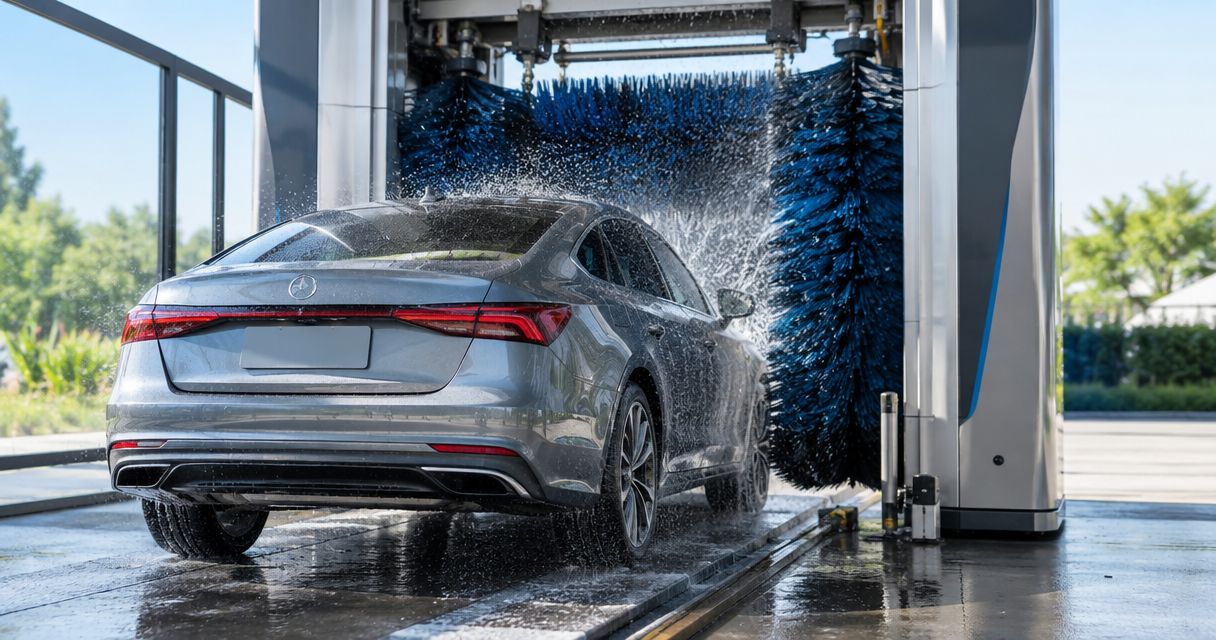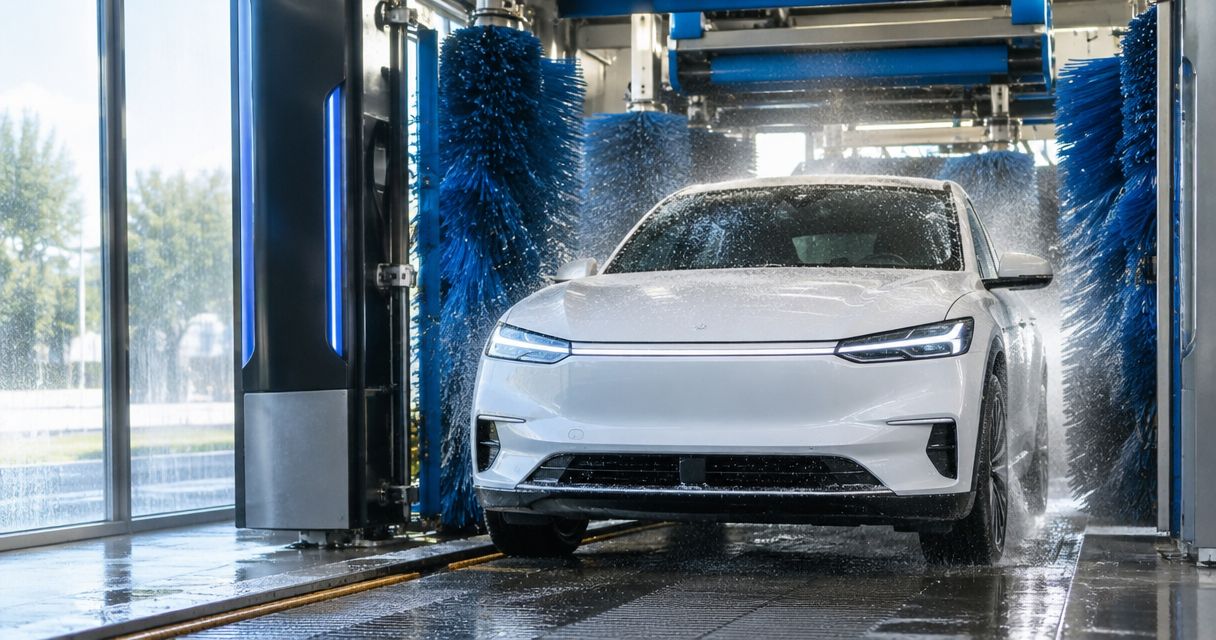
Yes—an electric vehicle can use an express tunnel wash when its owner's manual permits that wash type and you follow the correct loading procedure. The main caveat is vehicle control: a conveyor wash requires the vehicle to roll as instructed without an automatic brake or parking function interrupting movement. Check compatibility before entering; being electric alone does not establish whether a particular tunnel is suitable.
- Electric vehicle express tunnel wash safety depends on your owner's manual, wash equipment, and correct vehicle settings.
- Confirm how your vehicle stays in Neutral before entering a conveyor wash.
- A car wash mode does not override manufacturer restrictions on brushes or other wash equipment.
- Cruzinwash offers exterior washing and separately selected interior cleaning, hand washing, and detailing in Farmingdale.
Why this matters
Choosing the wrong setting at the entrance is different from choosing the wrong wash type. You need to settle both questions before the attendant starts loading your vehicle, not while the conveyor is moving.
For Farmingdale drivers considering Cruzinwash, start with your vehicle's instructions and confirm the wash setup with the attendant. Then choose the service that matches the cleaning you need. An exterior wash does not replace interior cleaning or detailing.
Can electric vehicles go through an express tunnel wash safely?
Yes, when the manufacturer permits the equipment and the vehicle can follow the tunnel's operating procedure. There is no single loading sequence that applies to every electric vehicle. Your owner's manual controls the vehicle settings; the attendant controls the site's loading instructions.
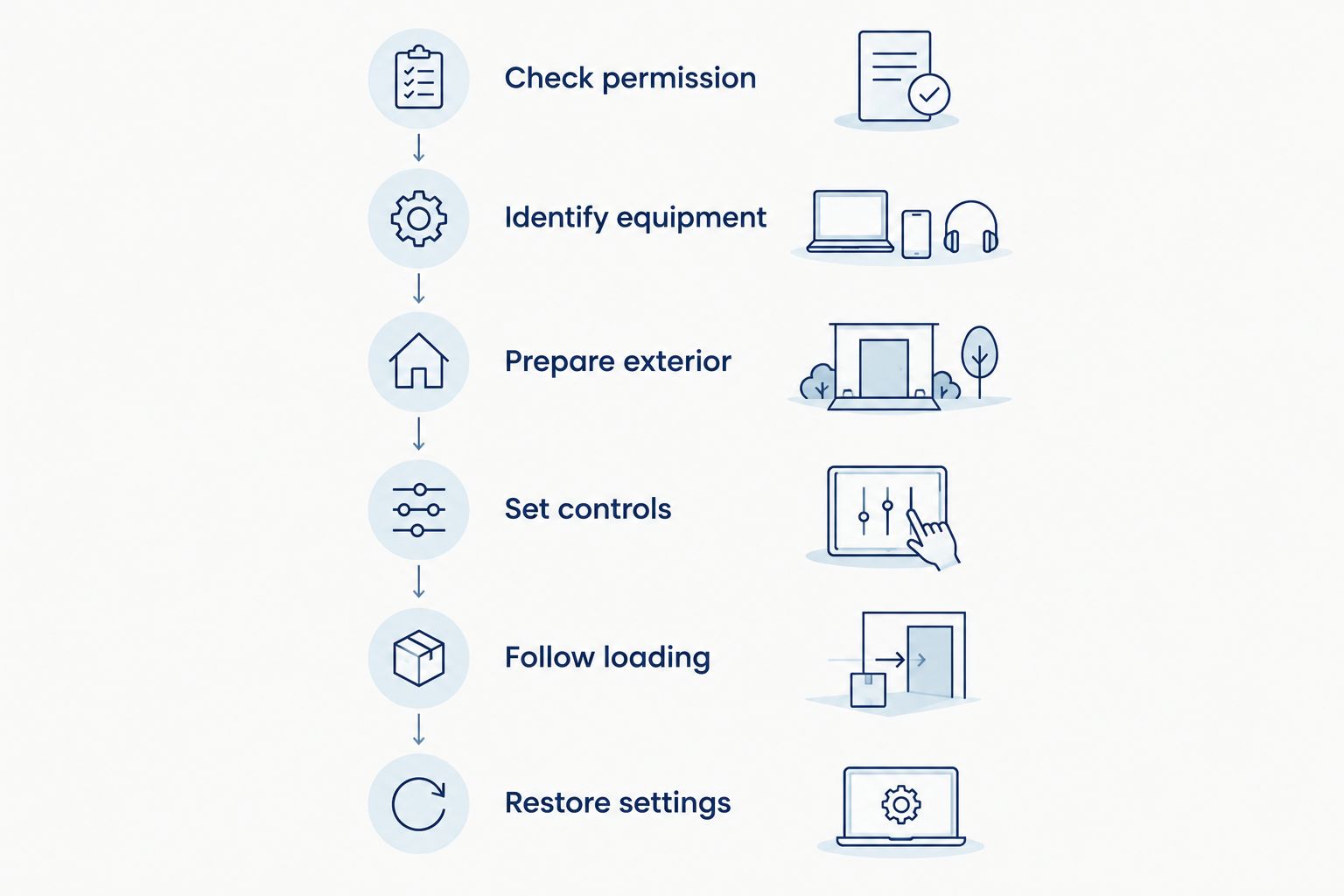
Use this sequence before your first visit in 2026:
- Check permission. Read the automatic car wash section of your owner's manual. Look for restrictions on contact equipment, touchless washing, wheels, accessories, and exterior finishes.
- Identify equipment. Ask whether your vehicle moves on a conveyor or remains stationary. Confirm whether the equipment meets any restrictions in your manual.
- Prepare exterior. Close windows and the charge-port door. Handle mirrors, antennas, roof accessories, and other attachments exactly as the manufacturer and operator require.
- Set controls. Follow the vehicle-specific instructions for Neutral, any wash mode, automatic wipers, and brake-related features. Do this before loading when instructed.
- Follow loading. Let the attendant direct positioning and timing. Do not substitute a remembered procedure from another vehicle or wash.
- Restore settings. After the exit signal and when safe, resume normal driving controls and restore any settings you changed.
If the vehicle instructions and the site's procedure conflict, do not enter the conveyor. Ask about another wash method instead of improvising.
Which wash method fits your electric vehicle?
Choose by manufacturer permission and cleaning needs—not by the word electric. A stationary automatic wash, a conveyor tunnel, and a hand wash involve different procedures. None is an automatic recommendation for every vehicle.
| Wash method | Best for | Practical advantage | Limitation to check |
|---|---|---|---|
| Express tunnel | Drivers whose manuals permit the equipment and who can follow its loading procedure | Exterior cleaning through an automated wash process | Conveyor operation and vehicle settings must be compatible |
| Stationary automatic wash | Drivers whose manuals permit that specific equipment | The vehicle stays in position while the wash operates | Stationary does not necessarily mean touchless; confirm the equipment |
| Hand wash | Drivers whose manuals restrict tunnel equipment or who need a different cleaning approach | Offers an alternative to automated tunnel equipment | Washing products, tools, and methods still need to suit the vehicle |
An express tunnel is not necessarily touchless. A stationary wash is not necessarily brush-free. Ask what contacts the vehicle rather than relying on the name of the service.
If your manual rules out the available tunnel, read about requesting a hand wash instead of a tunnel wash. Confirm the actual method before handing over your vehicle. Hand washing is an alternative—not permission to ignore care instructions.
Why electric vehicle tunnel-wash compatibility varies
Two vehicles can look similar at the entrance and need different preparation. These factors determine the right decision:
- Manufacturer restrictions. The manual can limit the permitted automatic wash type or give special exterior-care instructions. Follow those restrictions even when another driver uses the tunnel successfully.
- Conveyor requirements. A moving conveyor and a stationary wash need different vehicle behavior. Ask which setup you are entering before selecting controls.
- Neutral and brake settings. Confirm the procedure that lets your vehicle roll when required. Do not assume selecting Neutral once completes every necessary step.
- Automatic exterior features. Follow the manual's directions for automatic wipers, mirrors, and other features that need preparation before washing.
- Vehicle condition and accessories. Ask about loose trim, damaged seals, roof-mounted equipment, and nonstandard attachments before entry. A compatible vehicle model does not make every accessory compatible.
For a first wash in 2026, check the manual for the vehicle you actually drive. A demonstration for a different model, model configuration, or software interface is not a substitute for those instructions.
Do I need car wash mode in an electric vehicle?
Use car wash mode if your owner's manual directs you to use it for the equipment you are entering. A feature name is not proof that every tunnel is permitted. Read what the mode changes and whether any separate steps remain.
Some vehicle instructions distinguish between preparing the exterior and allowing the vehicle to roll. Treat those as separate checks. A closed charge-port door and disabled automatic wipers do not establish that the vehicle is ready for conveyor movement.
Before joining the queue, find the relevant instructions while parked. If you cannot identify the required control or confirm its status, stop and ask before loading. The entrance is the wrong place to search through unfamiliar menus.
Does an electric vehicle need to stay in Neutral throughout the wash?
A conveyor wash requires the vehicle to remain able to roll according to the operator's instructions. Use the manufacturer's exact procedure for that situation, including any instructions about brakes, power state, doors, or driver position.
Do not copy another driver's settings. Electric vehicles do not share a universal Neutral procedure, and a stationary automatic wash can require a different setup from a conveyor wash.
Ask the attendant when to select the required setting and when to resume normal driving. Do not change gear or apply a control unexpectedly while the conveyor is moving. If something goes wrong, alert the operator and follow the site's stop instructions.
Can water from a tunnel wash damage an electric vehicle's battery?
An electric vehicle's high-voltage components are designed with protection against ordinary environmental water exposure. That does not make every washing method acceptable or remove the need to follow the manufacturer's washing restrictions.
Keep the charge-port door closed as instructed. Do not wash a vehicle while it is connected to charging equipment, and do not treat a tunnel wash as permission to direct high-pressure water into openings or damaged areas.
If the vehicle has collision damage, a loose charging flap, a water-related warning, or a known sealing problem, resolve that concern before washing. An existing fault calls for vehicle guidance, not a different guess at the wash entrance.
What should you tell the attendant before loading?
Tell the attendant it is your first visit with this vehicle and state any restrictions from the manual. Ask how the tunnel moves the vehicle and what the operator needs you to do at entry and exit.
Keep the conversation specific:
- Does the vehicle move on a conveyor?
- Does the wash use equipment that contacts the body?
- Are the vehicle's tires, wheels, and attached accessories acceptable?
- When should you select the required vehicle setting?
- What should you do if the vehicle will not remain ready to roll?
If you cannot reconcile the answers with the manual, stay out of the loading lane. A clear decision before entry beats troubleshooting on the conveyor. The attendant can explain the wash; the manufacturer supplies the vehicle-specific operating instructions.
Should you choose a single wash or an exterior wash club?
Establish compatibility before committing to repeat visits. Membership does not change the vehicle's restrictions or make an unsuitable wash method suitable.
A single wash fits a driver who wants an individual exterior-cleaning visit. An exterior wash club fits a driver planning repeated exterior washes, provided the equipment suits the vehicle and the current membership terms fit their needs. Confirm the covered wash, enrollment requirements, billing, cancellation rules, and any vehicle restrictions before joining in 2026.
Cruzinwash is best for Farmingdale drivers seeking exterior washing with interior cleaning or detailing selected separately. Its services include express exterior washing, full-service interior cleaning, hand washing, detailing, and monthly unlimited wash club memberships.
The distinction matters after a school run, a commute, or a trip with muddy shoes. Cleaning the outside does not remove crumbs from seats or dirt from floor mats. Choose interior service for an interior problem; do not assume an exterior membership includes it.
Choose your next wash
Review exterior washing, interior cleaning, hand washing, and detailing before choosing your service.
FAQ
Is an electric vehicle express tunnel wash safe in 2026?
An electric vehicle express tunnel wash is suitable when the owner's manual permits that equipment and you follow the correct loading procedure. Confirm both the wash type and the settings needed for conveyor movement before entering.
Can I take an electric vehicle through a wash with brushes?
Use a wash with contact equipment only when your vehicle's care instructions permit it. If the manual specifies touchless washing, choose equipment that meets that restriction rather than assuming car wash mode overrides it.
What if my electric vehicle will not stay in Neutral?
Do not enter a conveyor wash if you cannot follow the manufacturer's procedure for keeping the vehicle ready to roll. Stay out of the loading lane and check the instructions before proceeding.
Should I turn off automatic windshield wipers before washing?
Follow your owner's manual's directions for automatic wipers before entering the wash. Confirm the required setting before loading rather than waiting for water to reach the windshield.
Does car wash mode mean any automatic wash is allowed?
No. Car wash mode does not replace the manufacturer's restrictions on wash equipment or exterior care. Check both the mode instructions and the permitted washing methods.
Can I get a hand wash if my electric vehicle cannot use the tunnel?
Ask about hand washing when the manual restricts the available tunnel equipment. Confirm that the washing method and products follow your vehicle's care instructions before the service begins.
Does an exterior wash membership include cleaning inside my electric vehicle?
Do not assume an exterior wash membership includes interior cleaning or detailing. Confirm the covered exterior service and arrange interior work separately when needed.
One last thing
The most useful preparation is knowing how to keep your vehicle in the state the conveyor requires. Reading about water protection answers only part of the question. Before your next wash in 2026, locate the automatic-wash instructions and practice finding the relevant controls while safely parked.
At Cruzinwash, start by confirming that the service matches your vehicle's instructions. Then choose exterior washing, interior cleaning, hand washing, or detailing for the job you actually need done. Clean outside and clean inside are separate decisions.