Yes—a brand-new car can go through an automatic wash when the vehicle manufacturer permits that wash method and the car meets the wash operator’s requirements. Newness alone is not the deciding factor: fresh repair paint, recently installed protective film, specialty finishes, and vehicle-specific instructions can change which wash is appropriate.
- An express exterior car wash suits a new car only when its manufacturer permits the wash method.
- Factory paint and fresh repair paint need different decisions; follow the refinisher’s instructions after bodywork.
- Cruzinwash offers exterior washing and hand washing in Farmingdale; confirm vehicle compatibility before choosing.
- An exterior wash club is not a substitute for separately selected interior cleaning or detailing.
Is it safe to run a brand-new car through an automatic wash?
Yes, provided the wash method matches your car’s care instructions. A recently purchased vehicle does not automatically need hand washing, and an automatic wash is not automatically suitable for every new vehicle.
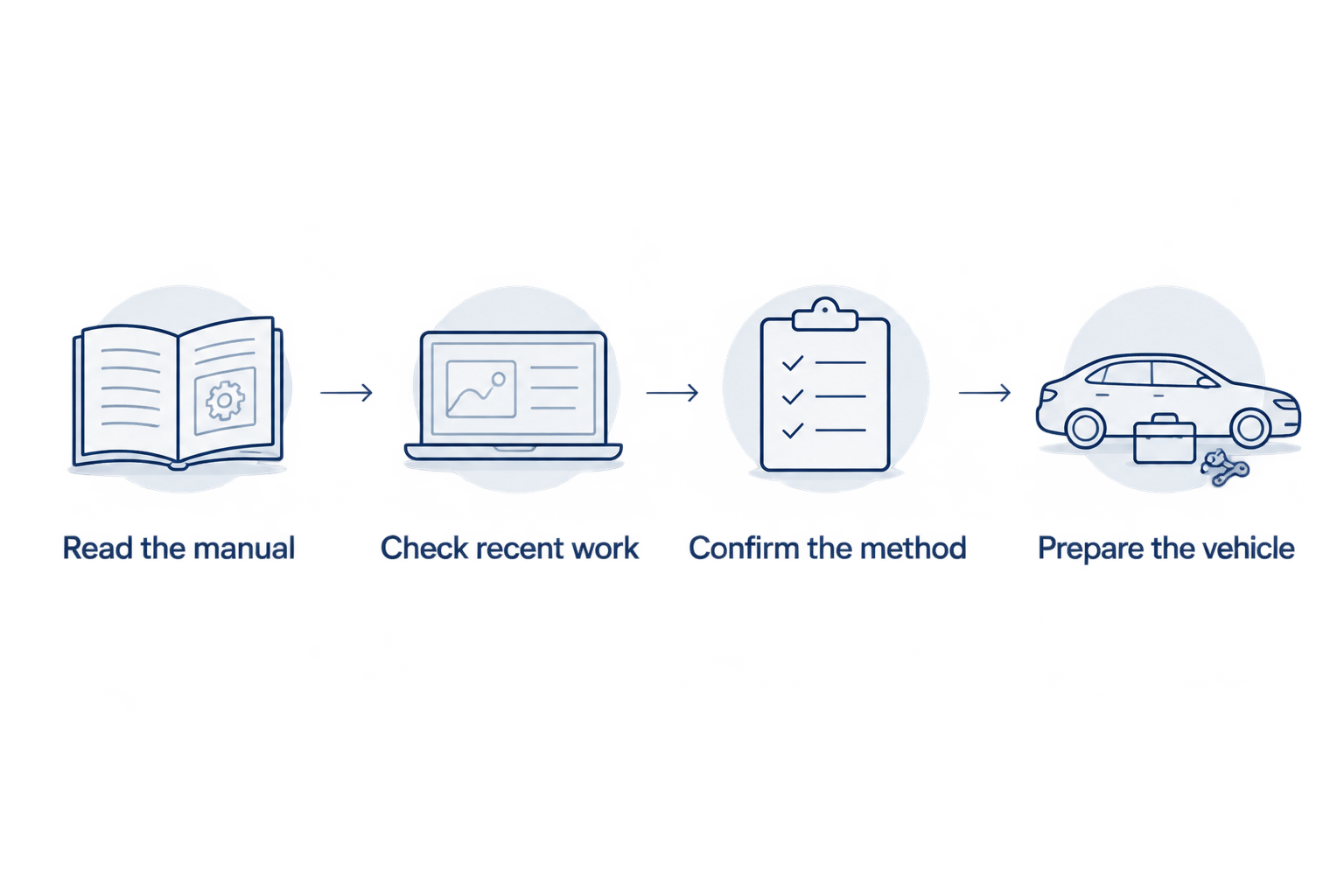
Before your first visit in 2026, make these checks:
- Read the manual. Find the washing section for your exact model and finish. Look for restrictions involving contact equipment, water pressure, conveyor operation, exterior accessories, and automatic wipers.
- Check recent work. Ask whether the vehicle has fresh repair paint, newly installed paint-protection film, a vinyl wrap, or a recently applied coating. Follow the relevant installer’s or refinisher’s washing instructions rather than assuming delivery day settles the question.
- Confirm the method. Ask the operator what touches the vehicle and how it moves through the wash. Explain any manufacturer restrictions before entering.
- Prepare the vehicle. Follow the manual and attendant’s directions for windows, mirrors, wipers, transmission settings, and removable accessories. Do not guess at conveyor settings while entering the lane.
Cruzinwash offers express exterior washing, hand washing, interior cleaning, and detailing in Farmingdale. Choose the service after checking your vehicle’s requirements—not simply because the car is new.
The useful distinction is between a compatible wash and an incompatible one. Neither the vehicle’s purchase date nor the word automatic answers that question on its own.
Why this matters
Your first wash should establish a routine you can repeat without guessing. For a Farmingdale driver, that means knowing whether an exterior wash handles the job, whether the vehicle needs hand washing, and whether a separate interior service is actually necessary.
An express exterior car wash addresses exterior cleaning. It does not answer every question about paint correction, cabin cleaning, or protective treatments.
For a 2026 vehicle, use the instructions for that exact model and finish. Advice for a previous car—even another car from the same manufacturer—is not a substitute for the current vehicle’s manual.
Which wash method fits a brand-new car?
Automatic contact washing, touchless washing, and hand washing describe different cleaning methods. None is a universal guarantee against damage. The right choice depends on manufacturer permission, equipment compatibility, the vehicle’s condition, and how the washing is performed.
| Wash method | Best for | Practical advantage | Limitation to check |
|---|---|---|---|
| Automatic contact wash | Drivers whose vehicles permit that equipment | Mechanized cleaning for routine exterior dirt | Wash materials contact the finish; confirm manufacturer restrictions and accessory compatibility |
| Touchless automatic wash | Drivers whose instructions permit it and who want no washing materials contacting the body | Cleans using water and cleaning chemicals rather than contact wash materials | Pressure and chemical restrictions still matter; contact-free does not mean restriction-free |
| Hand wash | Drivers whose vehicles need a permitted manual cleaning method | Allows direct attention to individual areas | Dirty tools or poor technique can still scratch paint; confirm the method rather than relying on the label |
These are method comparisons, not descriptions of the equipment at a particular location. Before visiting, check whether the wash is touchless or brushless and confirm the current process with the operator.
Automatic contact wash: best for permitted routine washing
Choose an automatic contact wash only when your manufacturer allows it and the vehicle meets the operator’s requirements. The convenience does not remove the need to check loose trim, racks, or aftermarket equipment.
Verdict: choose it when both the vehicle instructions and the operator permit it. Do not treat a new-car purchase as automatic approval.
Touchless wash: best for permitted contact-free cleaning
Touchless equipment avoids wash cloths or brushes touching the body. That is a specific feature, not proof that every finish, film, or coating is compatible with the wash.
Verdict: choose it when the manufacturer permits the pressure and cleaning method. Confirm the process rather than interpreting touchless as a blanket safety promise.
Hand wash: best for a permitted manual approach
Hand washing gives the person cleaning the vehicle direct control over where and how they work. That helps when a vehicle requires a particular approach, but technique and clean equipment still matter.
Verdict: choose it when manual washing fits the care instructions. Ask how delicate areas and any recently installed protection will be handled.
Does new factory paint need time before washing?
Factory-applied paint and fresh repair paint are not the same situation. Factory finishes undergo controlled curing during vehicle production; buying a new car does not, by itself, create a universal waiting period before washing.
Use the manufacturer’s care instructions, not an arbitrary countdown from delivery day. A car bought yesterday and a car bought earlier in 2026 need decisions based on their actual finish and condition.
Repair work changes the question. If a panel was repainted before delivery or after an accident, ask the body shop when washing is permitted and which methods to avoid.
Get instructions that distinguish washing from waxing, polishing, and applying protective products. Approval for one task does not establish approval for the others, and a salesperson’s general reassurance should not replace the refinisher’s specific directions.
What if the new car has a coating, wrap, or protective film?
A coating, vinyl wrap, or paint-protection film adds another set of care instructions. The vehicle manual still matters, but so do the product manufacturer’s and installer’s directions.
Tell the operator what is installed and when the work was completed. Ask the installer about initial washing restrictions, permitted cleaning products, water pressure, and any areas requiring special attention.
Do not assume a protective layer makes the vehicle scratch-proof. It also does not establish that every tunnel treatment is appropriate.
For a new installation in 2026, keep the written aftercare instructions with your vehicle information. If those instructions conflict with the wash process, choose a permitted alternative instead of asking the operator to overlook the restriction.
The same approach applies to matte or other specialty finishes. Identify the finish before selecting wash treatments; do not assume a package intended for ordinary gloss paint suits every surface.
Why automatic-wash suitability varies
The factors below explain why two new cars can need different washing decisions. Match the process to the vehicle, rather than choosing by age alone.
- Manufacturer restrictions. Washing instructions can differ by model, finish, and installed equipment. Read the relevant section before choosing an automatic method.
- Paint condition. Factory paint, fresh repair paint, and damaged paint are different starting points. Tell the operator about recent work or existing defects.
- Added protection. Coatings, wraps, and protective film have their own care requirements. Confirm any initial restrictions with the installer.
- Exterior equipment. Roof racks, carriers, antennas, and aftermarket accessories can affect wash compatibility. Check both the equipment instructions and the operator’s requirements.
- Wash operation. Contact materials, water pressure, and conveyor arrangements affect what you need to confirm. A familiar-looking entrance does not establish that the process matches a previous wash.
- Vehicle controls. Automatic wipers, parking functions, and transmission behavior require model-specific preparation. Ask for help before entering if the required settings are unclear.
These checks are especially useful when you switch vehicles. A routine that worked for your old car is not automatically the correct routine for its replacement.
How should you prepare before entering the wash?
Make preparation a parked-car task. Read the wash instructions before reaching the entrance, and tell the attendant that this is your first visit with the vehicle.
Close windows and the sunroof fully. Follow the vehicle manual for automatic wipers, mirrors, antennas, and any wash mode; follow the operator’s directions for the particular wash system.
Do not use a universal rule about leaving the engine running, selecting neutral, or applying the parking brake. Conveyor washes and stationary systems operate differently, and vehicle controls differ too.
Remove or secure accessories only as their instructions require. If you cannot establish that a rack, carrier, loose trim piece, or other attachment is compatible, stop and ask before entering.
Afterward, inspect the vehicle in a safe parking area. Look for remaining contamination and any concern you want to raise with the operator; avoid rubbing stubborn material aggressively with a dry towel.
Should you start with a single wash or an exterior wash club?
Confirm the washing method before deciding how often to buy it. A membership does not change the vehicle’s compatibility with the equipment.
A single wash is a practical starting point when you are still checking your new car’s routine. An exterior wash club fits drivers who already know the permitted method and want recurring exterior cleaning.
Cruzinwash is best for Farmingdale drivers who want exterior washing, hand washing, and interior cleaning options at one business. The limit is service scope: an exterior membership is not a promise that cabin cleaning or detailing is included.
Before joining in 2026, confirm:
- Which exterior services the selected plan covers.
- Whether your specific vehicle and installed accessories qualify.
- The billing cycle, renewal terms, and cancellation process.
- Any usage or vehicle-registration conditions.
- How separately selected interior cleaning, hand washing, or detailing is handled.
Do not choose a membership to solve a different cleaning problem. Muddy mats, crumbs, and seat spills call for an interior service discussion; an exterior wash does not clean the cabin.
Likewise, persistent bonded contamination or finish defects deserve an assessment rather than repeated passes through the wash. Ask what service addresses the actual issue before adding anything.
Choose your next wash
Review exterior washing, hand washing, interior cleaning, and detailing before selecting a service.
Should I hand-wash my new car instead?
Hand washing is the right choice when it matches the manufacturer’s instructions or a refinisher’s or installer’s restrictions. It is not automatically safer simply because a person holds the tools.
Ask about clean equipment, the approach to stubborn dirt, and treatment of sensitive areas. If your manual excludes the available automatic method, choose a permitted manual process rather than treating convenience as an exception.
Does an express exterior car wash clean the inside too?
An express exterior car wash addresses the outside of the vehicle, not the cabin. Confirm interior cleaning separately instead of assuming that a wash package or unlimited exterior membership includes it.
Cruzinwash offers full-service interior cleaning and detailing as well as exterior washing. Explain whether you need routine cabin cleaning or attention to a specific spill, stain, or other issue, then confirm the service scope before work starts.
FAQ
Can I take my brand-new car through an automatic wash today?
Yes, if the vehicle manufacturer permits that wash method, the operator accepts the vehicle, and no recent paintwork or protective installation imposes restrictions. Check those conditions before entering rather than relying on the car’s age.
Do I have to wait after buying a new car before washing it?
Buying a new car does not create a universal washing waiting period. Follow the vehicle manual, and get separate instructions for any fresh repair paint, coating, wrap, or protective film.
Is a touchless wash always safe for new paint?
No, touchless does not mean suitable for every finish. The manufacturer’s restrictions on water pressure, cleaning products, and the washing process still apply.
Will hand washing guarantee that my new car will not get scratched?
No, hand washing does not guarantee a scratch-free result. Clean tools and appropriate technique matter, and the method must match the vehicle’s care instructions.
Can my new electric car use an express exterior car wash?
An electric car can use an express exterior car wash when its manufacturer permits the method and its operating requirements are met. Check the manual for wash mode, conveyor preparation, and model-specific restrictions.
Does an exterior wash club include interior cleaning?
Do not assume an exterior wash club includes interior cleaning. Confirm the selected plan’s covered services and arrange cabin cleaning separately when it is not included.
What should I ask Cruzinwash before my new car’s first wash?
Ask Cruzinwash which washing method is used and whether your vehicle, finish, and accessories meet the requirements. Mention recent paintwork, a coating, a wrap, or protective film before selecting a service.
One last thing
Ask about work completed before delivery—not just work completed after purchase. If you are unsure whether the vehicle has repair paint or newly installed protection, get that information from the seller before establishing your wash routine.
Keep the manual’s washing instructions and any installer aftercare directions easy to find. That gives you a clear answer at the wash entrance: which method is permitted, what preparation is required, and when a different service makes more sense.