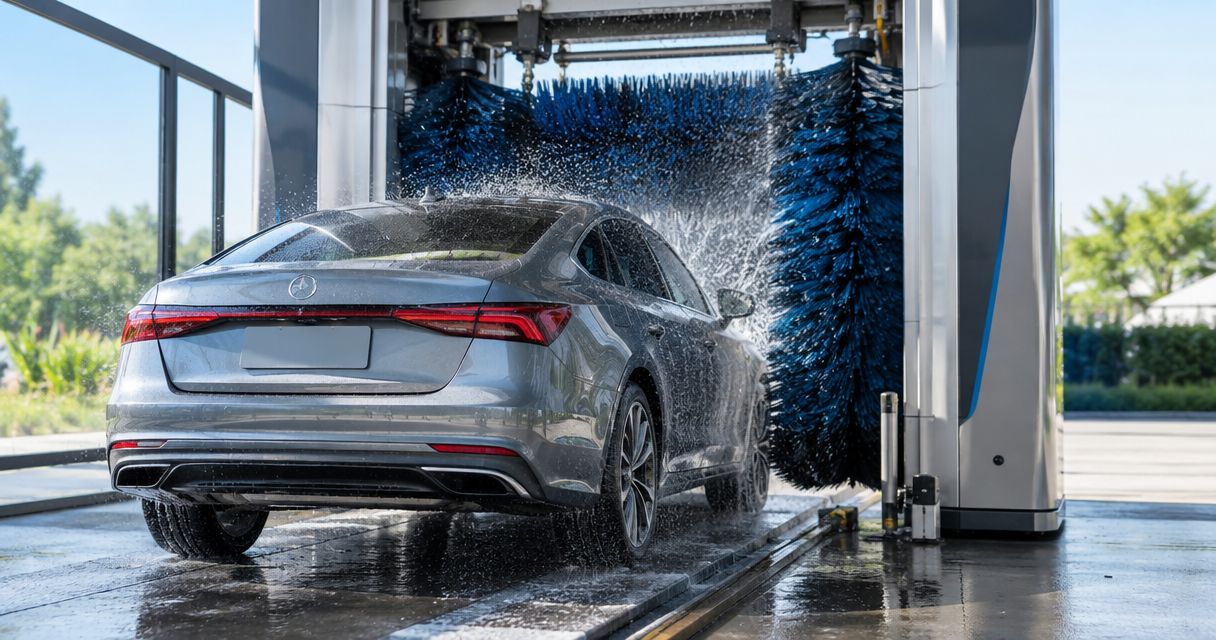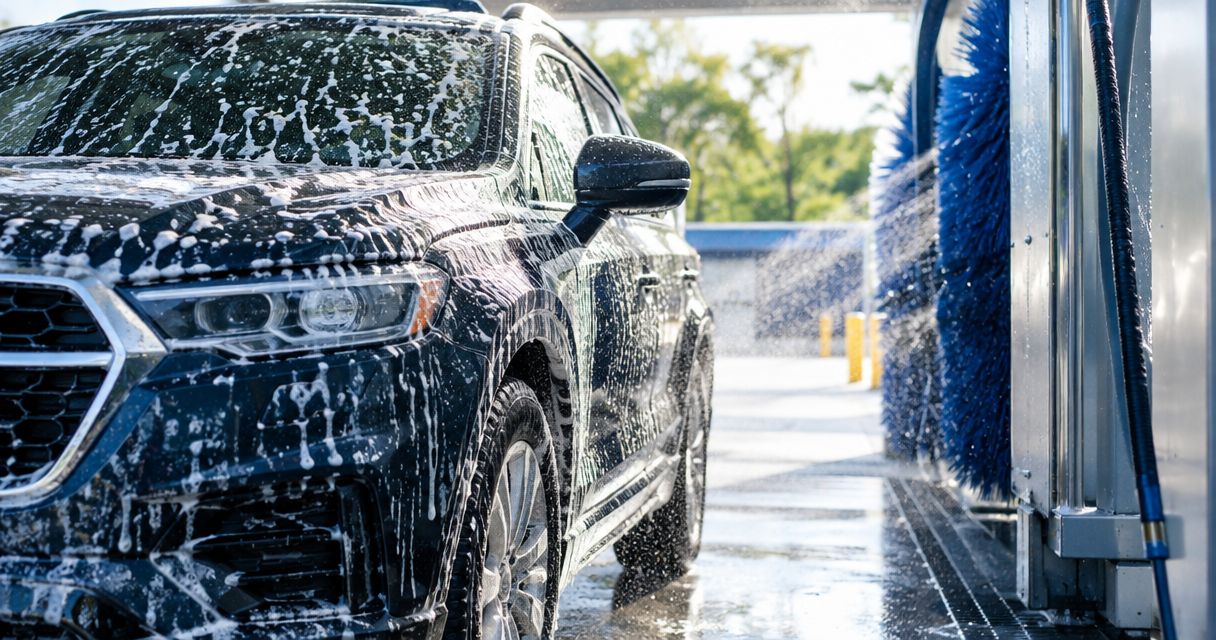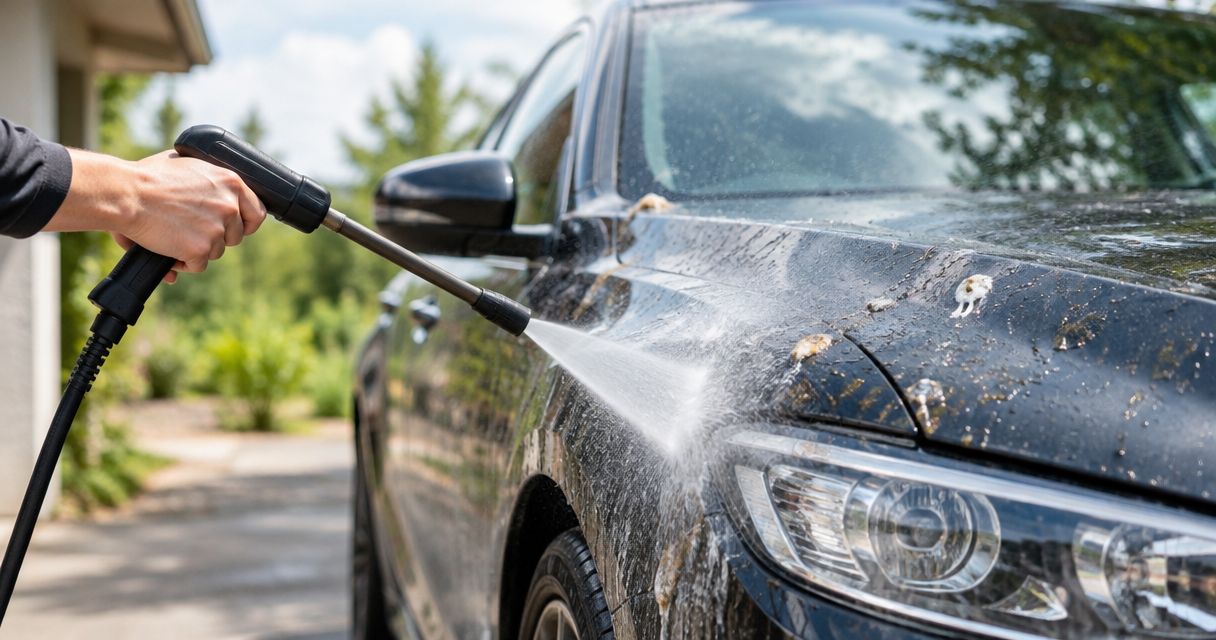
An express exterior car wash can remove fresh bird droppings, but it does not guarantee removal of dried droppings or hardened tree sap. Safe removal depends on the condition of the deposit and your vehicle’s finish; a mark left after cleaning can be paint damage rather than dirt that needs another wash.
- An express exterior car wash can remove fresh bird droppings; hardened tree sap often needs targeted treatment.
- Cruzinwash offers Farmingdale drivers exterior washing, hand washing, and detailing; confirm which service addresses your particular spot.
- Never scrape dried deposits or assume repeated wash passes will remove paint damage.
- An exterior wash club covers its stated exterior services, not automatic inclusion of interior cleaning or detailing.
Does an exterior wash safely remove bird droppings and tree sap?
Fresh contamination and hardened deposits need different approaches. Bird droppings that have not dried onto the surface are generally easier to wash away. Hardened sap is more resistant, and removing the deposit does not necessarily remove a stain or etched mark underneath it.
At Cruzinwash, Farmingdale drivers can choose exterior washing, hand washing, and detailing. Tell the staff what is on the vehicle before choosing a service; the service name alone does not establish whether targeted sap removal is included.
| Service | Best for | Main benefit | Main limitation |
|---|---|---|---|
| Express exterior wash | Routine exterior dirt and fresh surface contamination | Cleans the exterior as part of your regular wash routine | Does not guarantee hardened sap removal or paint correction |
| Targeted hand washing | Deposits that need individual attention | Allows the person cleaning to focus on a particular area | Hand washing alone does not guarantee sap or etching removal |
| Detailing assessment | Persistent deposits or marks left after cleaning | Helps distinguish contamination from finish damage | The treatment and scope need confirmation before work begins |
| Interior/full-service cleaning | Dirt inside the vehicle | Addresses cabin cleaning needs | Interior cleaning does not address sap on exterior paint |
Choose the service for the problem you actually have. A dirty cabin, a sticky roof, and a dull mark on the hood are separate cleaning decisions, even when they happen on the same car.
Why this matters
For your 2026 wash routine, the useful distinction is removing contamination versus repairing the finish. Washing addresses material sitting on the surface. Paint correction addresses certain defects in the finish, and those are not interchangeable jobs.
Bird droppings should be removed promptly because they can damage automotive finishes. Tree sap also becomes harder to deal with after it dries and bonds to the surface. Waiting for your next convenient wash is not the right plan when you can safely address fresh contamination sooner.
For a Farmingdale driver who parks beneath trees at home or work, the practical move is simple: check the roof, hood, and glass before driving into the wash. Point out sticky or crusted deposits before cleaning starts, rather than discovering afterward that your chosen service did not address them.
Fresh bird droppings: wash promptly, without dry rubbing
Best for: an exterior wash when the contamination is fresh and the vehicle is suitable for that wash method. Fresh bird droppings are a reasonable reason to wash your car, but do not treat every deposit as ordinary road dust.
Avoid wiping droppings across dry paint with a paper towel or your hand. Droppings can contain abrasive material, and dragging that material over the finish risks scratching it. Follow your vehicle manufacturer’s cleaning guidance and use suitable automotive cleaning materials.
If you are already heading to the wash, show the affected area to the attendant first. Mention whether you have tried to clean it and whether the vehicle has a wrap, coating, recent repaint, or damaged clear coat. Those details help determine the appropriate cleaning approach.
The upside of an exterior wash is that it addresses the surrounding dirt as well as the visible deposit. The limitation is that a routine wash cannot promise to reverse damage that occurred before you arrived. A clean surface and an undamaged surface are not the same result.
Dried bird droppings: soften the deposit, not your standards
Best for: individual assessment before cleaning when the deposit is hard, crusted, or stuck. Dried droppings need more care than a fresh splash because removing them by force can damage the surface underneath.
Do not pick at the edges with a fingernail, scraper, or household cleaning pad. Avoid aggressive scrubbing. Use the cleaning approach specified for your vehicle’s finish, and let an attendant know if the deposit remains after washing.
Once the material is gone, inspect the area in good light. A visible outline, dull patch, or change in reflection does not automatically mean droppings are still present. It can be a sign that the finish itself has been affected.
That distinction changes your next move. More rubbing is not a diagnosis, and another exterior wash is not a substitute for examining the mark. Ask whether the remaining issue is contamination, staining, or etching before agreeing to further treatment.
Tree sap: targeted treatment beats repeated washing
Best for: a targeted cleaning assessment when the deposit remains sticky or has hardened. Tree sap is not simply loose dirt. An exterior wash can clean the surrounding panel while leaving bonded sap behind.
Do not assume a stronger household solvent is the answer. Products that are unsuitable for automotive paint, trim, wraps, or protective finishes can create another problem. Follow the vehicle and cleaning-product instructions, including any requirement to test compatibility in an inconspicuous area.
Tell the attendant where you found the sap and what you have already used on it. A roof scattered with small sticky spots needs a different discussion from a single mark on the windshield. The surface matters as much as the substance.
A targeted service offers attention to the affected area, but its limits still need to be clear. Ask whether sap removal is included, whether the finish needs inspection first, and whether any protection needs attention afterward. Do not buy a general service expecting an unconfirmed specialty treatment.
Why exterior-wash results vary
The same wash does not produce the same spot-removal result on every vehicle. These factors explain why:
- Deposit condition: Fresh contamination is generally easier to remove than material that has dried or hardened.
- Contamination type: Bird droppings and tree sap do not behave like ordinary loose dust or road dirt.
- Surface condition: Existing clear-coat damage, peeling finishes, and repairs require attention before cleaning.
- Surface material: Painted panels, glass, plastic trim, and vinyl wraps have different care requirements.
- Previous treatment: Scraping, abrasive rubbing, or unsuitable chemicals can leave damage that washing will not remove.
- Service scope: Routine exterior cleaning is different from targeted contaminant removal or paint correction.
Describe what you can actually see. “There is a sticky raised spot on the roof” gives the attendant more useful information than “the car needs a stronger wash.” You do not need to identify the exact substance yourself.
What should you do before entering the wash?
Use this 2026 pre-wash checklist when you notice bird droppings or sap. The goal is to choose the cleaning approach before the deposit gets scrubbed, scraped, or mistaken for a finish defect.
- Inspect the spots. Look at the roof, hood, trunk, glass, and trim. Note whether the material looks fresh, crusted, sticky, or already removed with a mark underneath.
- Check finish guidance. Review the relevant care instructions for your vehicle, wrap, coating, or recent paintwork. Do not assume every exterior surface accepts the same treatment.
- Tell the attendant. Point out the affected areas and explain any cleaning products or tools you have already used.
- Confirm the service. Ask whether the chosen wash addresses those deposits or whether targeted treatment needs a separate assessment.
- Review the result. Inspect the clean area before deciding what to do next. A remaining mark needs identification, not automatic repeat washing.
This sequence also helps you explain your expectations. Say whether you want routine exterior cleaning, removal of a specific deposit, or an assessment of a mark that has already survived cleaning. Those requests are related, but they are not identical.

Should you choose a hand wash instead of an express wash?
Choose a hand-wash assessment when a stubborn spot needs individual attention, not because hand washing guarantees damage-free removal. Technique, materials, finish condition, and the treatment used all matter.
An express wash suits routine exterior cleaning when your vehicle meets the wash’s requirements. Hand washing allows closer attention to particular areas, but the phrase does not establish that hardened sap removal is part of the service.
Ask a direct question: does the proposed hand wash include treatment of these specific deposits? If not, ask what service does. This keeps you from choosing a different wash method while leaving the actual cleaning problem unresolved.
Does a remaining mark mean the wash failed?
A remaining mark does not prove that contamination is still on the car. After the deposit is removed, the underlying finish can still show staining or etching.
Look without scraping or rubbing to test the spot. A visible difference in gloss or reflection needs assessment, especially if the area no longer appears to have material sitting on it. Tell the attendant what changed after the wash and what remains.
Avoid demanding repeated passes as the default fix. If the problem is in the finish rather than on it, the next conversation is about the condition of that finish. Some damage needs work beyond routine washing, and a wash cannot guarantee restoration.
Is an exterior wash club useful for this in 2026?
A wash club supports routine exterior cleaning; it is not a guarantee against bird-dropping damage or hardened sap. Choose membership around your regular washing needs, not around an assumption that every stubborn deposit receives specialty treatment.
Cruzinwash is best for Farmingdale drivers seeking routine exterior washing while choosing interior cleaning and detailing separately. The practical advantage is having those service categories available to discuss. The limitation is that an exterior membership does not automatically include every cleaning task your vehicle needs.
Before joining Cruzinwash in 2026, confirm the exterior services covered by the membership, vehicle eligibility, billing terms, cancellation requirements, and any limits on use. Also ask how staff handle a visit when bird droppings or sap need attention beyond the covered wash.
If your cabin needs cleaning too, make that a separate request. Do not assume “unlimited” means interior cleaning, detailing, targeted sap removal, or paint correction is included. Confirm the scope before authorizing additional work.
Choose Your Next Wash
Review exterior washing, hand washing, detailing, and wash-club options for your Farmingdale routine.
FAQ
Can an express exterior car wash remove fresh bird droppings?
An express exterior car wash can remove fresh bird droppings, but removal is not guaranteed for every deposit. Point out the affected area before washing and avoid rubbing the material across dry paint.
Will an exterior wash remove hardened tree sap?
An exterior wash does not guarantee hardened tree sap removal. Ask whether the deposit needs targeted treatment and confirm that the proposed treatment suits your vehicle’s finish.
Should I scrape dried bird droppings off before washing?
Do not scrape dried bird droppings off painted surfaces. Follow your vehicle manufacturer’s cleaning guidance and ask for help with deposits that remain stuck.
Why is there still a mark after the bird droppings are gone?
A remaining mark can be staining or etching rather than leftover droppings. Have the area assessed before trying stronger chemicals, harder rubbing, or repeated wash passes.
Does an exterior wash membership include tree sap removal?
An exterior wash membership does not automatically include targeted tree sap removal. Confirm the covered services and ask whether specialty treatment is separate before joining.
Is hand washing always safer for removing sap?
Hand washing is not automatically safer for removing sap. Safe treatment depends on technique, compatible cleaning materials, the surface, and the condition of the finish.
What should I confirm before joining a wash club in 2026?
Before joining a wash club in 2026, confirm covered exterior services, vehicle eligibility, billing, cancellation requirements, and usage terms. Ask separately about interior cleaning, detailing, and stubborn contaminant removal.
One last thing
The useful question after a wash is not just whether the spot is visible. It is whether the spot is still a deposit. Washing away bird droppings can reveal a mark that was hidden underneath; that does not mean more washing will fix it.
Before your next Farmingdale wash, point out the problem early. Get the surface clean, inspect what remains, and choose the next service from that evidence—not from the assumption that another pass must be better.