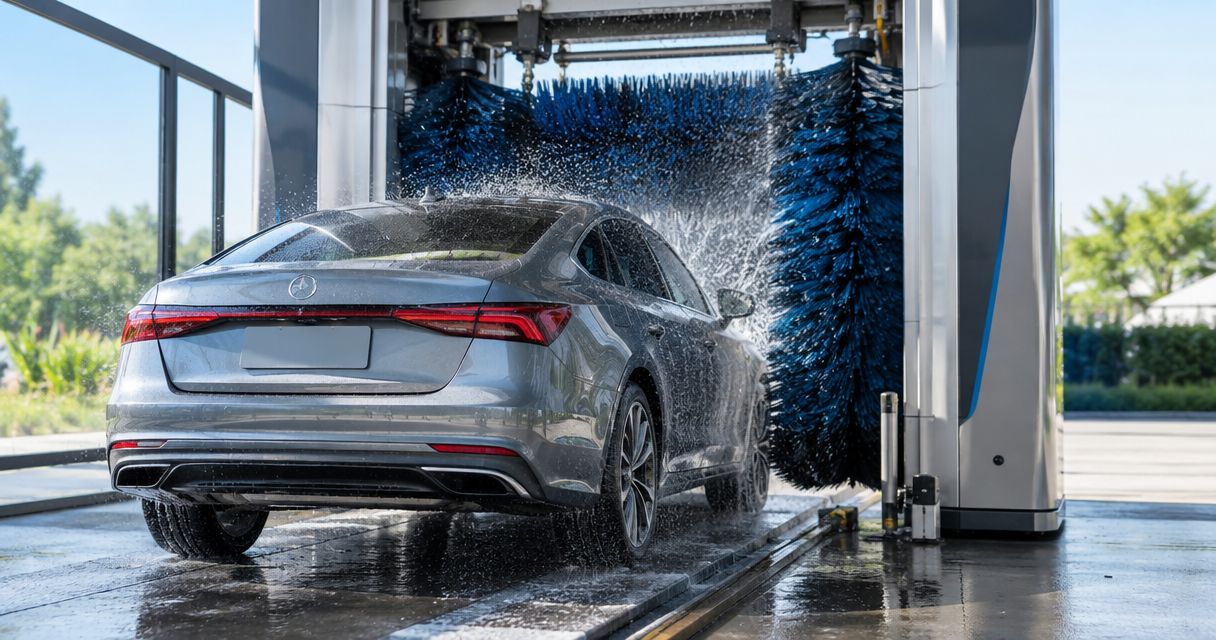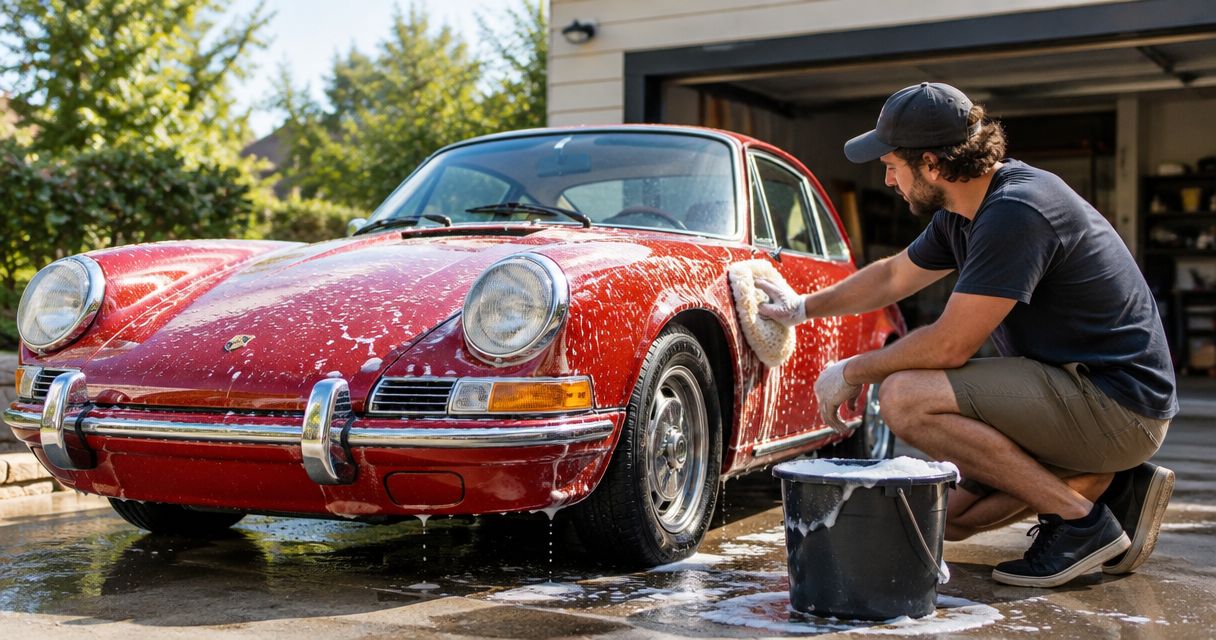
Classic-car hand washing is controlled exterior cleaning aimed at removing dirt while respecting a collector vehicle’s finish, trim, and vulnerable openings. A hand car wash for classic cars starts with the car’s condition—not its age alone—and keeps washing separate from polishing, restoration, and interior cleaning.
- A hand car wash for classic cars should start with a finish, trim, and seal inspection.
- Farmingdale collectors should choose the cleaning method around vehicle condition, not a hand-wash label alone.
- Keep exterior washing, interior cleaning, and detailing separate when comparing services.
- Confirm vehicle suitability and membership coverage before bringing a collector car to a wash.
Why hand washing matters for classic-car owners
A collector car needs a cleaning plan that accounts for repairs, replacement parts, and aging materials. Original paint, a recent repaint, loose brightwork, and a tired convertible top do not call for identical handling. Condition determines the wash method.
For Farmingdale-area drivers comparing hand car washes on Long Island, the useful question is not simply who washes by hand. Ask who will discuss your car’s finish and explain the proposed process before work starts.
In 2026, keep the decision practical: identify what needs cleaning, flag what needs protection, and agree on the scope. A clean exterior does not require paint correction, and a monthly exterior membership does not establish that a collector vehicle is suitable for the wash process.
How to plan a hand car wash for a classic car
Inspect the finish before choosing a method
Start with a parked-car walkaround in good light. Inspect 5 areas: paint, trim, glass, weather seals, and roof material. Look for peeling edges, loose pieces, cracked seals, and previous repairs. Photograph existing damage so you can explain it clearly.
You do not need specialist equipment for this first check. You do need to distinguish ordinary dirt from a surface that needs professional assessment. If paint is lifting or trim moves when lightly touched, stop treating the job as routine cleaning.
A repaint also deserves a separate conversation. Follow the refinisher’s washing and curing instructions rather than applying a universal waiting period.
- Identify original paint, repainted panels, and wrapped sections where known.
- Flag loose badges, mirrors, moldings, and antenna fittings.
- Check window seals and convertible-top edges for visible deterioration.
- Point out existing leaks and areas that must stay dry.
- Follow written care instructions from your painter or restorer.
Prepare a controlled washing setup
For a manual wash at home, work on a cool surface out of direct sun. Keep clean wash tools separate from wheel-cleaning tools. Dirt carried from wheels onto painted panels creates an avoidable abrasion risk.
A 2-bucket setup gives you a separate place to rinse the wash mitt before returning it to the wash solution. It does not make dirty tools safe indefinitely. Replace or thoroughly clean a mitt that falls on the ground, and follow the cleaner’s dilution instructions rather than mixing by eye.
Choose products whose instructions match the finish you are cleaning. Specialty finishes and unfamiliar materials need their own care directions; ordinary glossy-paint advice is not a substitute.
- Use a dedicated paint-washing mitt and clean drying towels.
- Keep wheel brushes and wheel towels out of the paint-cleaning kit.
- Read product labels for finish compatibility and dilution.
- Set tools down on a clean surface, not the driveway.
- Keep enough clean towels ready before you start.
Confirm the professional service before handing over the keys
The manual route gives you direct control, but you handle the setup, washing, drying, and inspection yourself. A professional hand wash shifts those tasks to a service provider. That makes the pre-wash conversation essential, not optional.
Cruzinwash provides hand washing, express exterior washing, full-service interior cleaning, detailing, and monthly unlimited wash club memberships in Farmingdale. Cruzinwash is best for Farmingdale drivers comparing hand washing with interior cleaning and detailing. For a collector car, confirm the proposed method and vehicle suitability before authorizing work.
The limitation is specific: a service category does not establish compatibility with your paint, repairs, trim, or seals. Ask Cruzinwash what the requested service covers and what requires separate approval. Do not assume a hand wash includes polishing or that an exterior membership includes cabin cleaning.
- Describe the finish, repairs, and delicate fittings before booking.
- Ask whether the proposed wash involves any automated equipment.
- Confirm how wheels, paint, trim, and roof material will be handled.
- Identify services you do not authorize, including polishing.
- Agree on exterior, interior, and detailing scope separately.
Wash gently and work in small sections
Start by rinsing away loose dirt using a method appropriate to the vehicle’s condition. Do not begin by rubbing a dry, dusty panel with a wash mitt. Keep water away from known leaks and avoid directing concentrated spray at damaged paint edges, seals, or loose trim.
Wash 1 panel at a time with light contact and clean tools. Work from cleaner upper surfaces toward dirtier lower areas, rinsing the mitt frequently. Do not scrub harder simply because a mark remains.
Bird droppings, sap, and bonded contamination need more care than ordinary road film. Use a finish-compatible treatment according to its instructions, or leave the problem for a detailer rather than improvising with household cleaners.
- Rinse loose contamination before contact washing.
- Keep wheel cleaning separate from painted-panel washing.
- Use light pressure instead of repeated forceful scrubbing.
- Rinse tools as they collect dirt.
- Stop when contamination requires treatment beyond the agreed wash.
Dry the car and check vulnerable areas
Drying is part of the wash, not an optional final touch. Use clean, paint-appropriate towels with light contact. Inspect the areas around mirrors, trim, door openings, and badges where water remains after the main panels look dry.
Open doors and the trunk only when it is safe to do so, then check accessible edges and seals. Do not flood cavities to chase dirt you cannot reach. Known water-entry problems need repair, not more aggressive washing.
Check the cabin for fresh moisture before putting the car away. If you use a cover, follow its instructions and avoid covering a car that is still wet or dirty.
- Dry painted surfaces with clean towels reserved for that purpose.
- Check trim edges and accessible panel gaps for retained water.
- Wipe accessible door and trunk edges without soaking them.
- Inspect the cabin near known leak points.
- Review the finish before applying any additional product.
Build a routine around how you use the car
A show car that leaves the garage occasionally and a collector car driven through Farmingdale traffic have different cleaning needs. Record what the car actually encounters: road film, rain, bird droppings, or winter residue. Use that record to choose services instead of committing to a fixed routine without context.
For your 2026 maintenance plan, separate the collector car from the household daily driver. Cruzinwash offers monthly unlimited wash club memberships, but confirm covered exterior services, vehicle eligibility, billing, and cancellation terms before joining. Interior cleaning, hand washing, and detailing should not be treated as included without explicit confirmation.
Membership convenience matters only after the process suits the vehicle. For an occasionally driven classic, evaluate individual washes against actual use rather than assuming a recurring plan is the right fit.
- Record washes and any finish or leak concerns afterward.
- Match cleaning to use and visible contamination.
- Confirm which vehicle a membership covers.
- Ask whether hand washing is included or separately charged.
- Keep interior cleaning and detailing on a separate service checklist.
Compare classic-car cleaning options in 2026
Choose the service that solves the current problem. Exterior dirt calls for cleaning; paint defects call for assessment. A service with a broader name is not automatically a better choice for a collector vehicle.
| Option | Best for | Main benefit | Key limitation |
|---|---|---|---|
| DIY hand wash | Owners who want direct process control | You choose the tools, products, and areas to avoid | Requires suitable space, careful technique, and your time |
| Professional hand wash | Owners who want exterior cleaning without doing the work themselves | A provider handles the agreed washing process | Hand washing alone does not establish finish compatibility |
| Express exterior wash | Vehicles confirmed suitable for the specific equipment | Focuses on exterior cleaning | Requires compatibility checks for delicate trim, repairs, and openings |
| Full-service interior cleaning | Owners whose main concern is cabin dirt | Addresses interior cleaning needs | Does not establish that paint correction or specialist material treatment is included |
| Detailing | Owners seeking work beyond a routine wash | Allows a more specific cleaning or finish-care scope | The word detailing does not define the exact work included |
| Unlimited exterior wash club | Eligible vehicles needing recurring exterior cleaning | Provides a recurring exterior-wash arrangement | Does not establish inclusion of hand washing, interiors, or detailing |
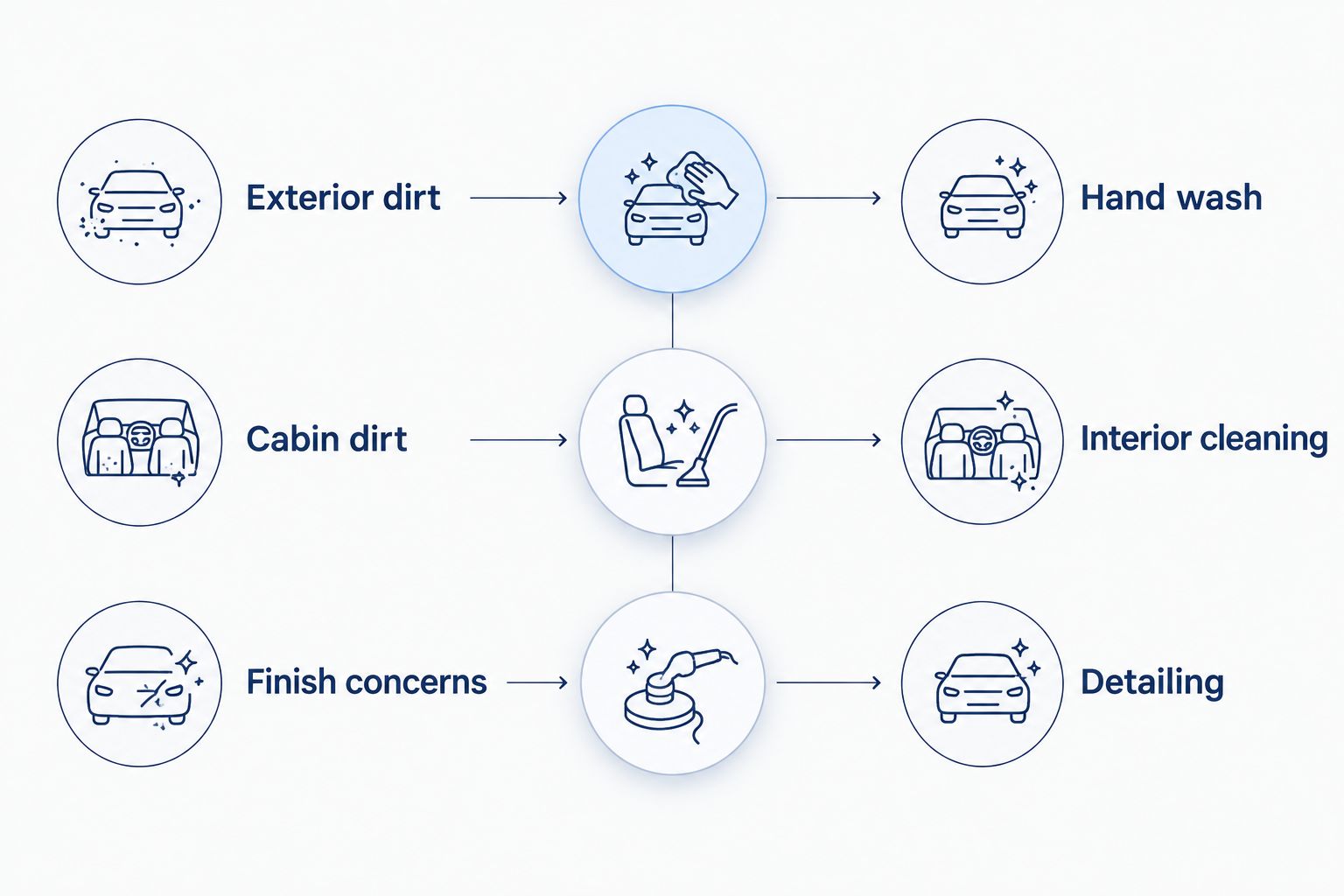
Before choosing Cruzinwash or any provider, explain whether your priority is exterior dirt, cabin cleaning, or a finish concern. Ask for the work to be described in plain language. A clear scope is more useful than a package name you have not checked.
Choose your next cleaning service
Review the options, then confirm the method and scope for your collector car.
Common mistakes classic-car owners make
Treating hand washing as a safety guarantee
Hand washing describes how cleaning happens, not the condition of the tools or the judgment behind the process. Dirty mitts and aggressive rubbing remain problems. Ask about technique and tell the provider about vulnerable areas.
Approving polishing when the car only needs cleaning
Washing removes dirt. Polishing addresses finish defects through a different process and needs separate approval, especially when paint history is uncertain. Do not accept scratch removal as an automatic part of a routine wash.
Forgetting old seals and replacement trim
A car can look restored while still having a water-entry problem or a loose molding. Explain known issues before washing begins. A visual inspection is useful, but it does not prove every seal is watertight.
Applying daily-driver membership logic to a collector car
Frequent use of an exterior wash club does not answer whether its process suits a particular classic. For 2026, confirm vehicle suitability first and membership terms second. Keep the collector car’s needs separate from your commuter’s routine.
Assuming exterior service includes the cabin
An exterior wash does not establish that seats, carpets, dashboard surfaces, or trunk areas will be cleaned. Request interior work separately and identify delicate materials. The same rule applies to detailing: agree on each task before work starts.
FAQ
What’s the best hand car wash for classic cars?
The best hand car wash for classic cars matches the process to the vehicle’s finish, trim, seals, and repair history. Choose a provider that discusses those details and confirms the work before starting.
Is hand washing always safe for original paint?
Hand washing is not an automatic safety guarantee for original paint. Deteriorated finishes, dirty tools, unsuitable cleaners, and excessive rubbing require attention regardless of who washes the car.
Can I take a classic car through an express exterior wash?
Confirm compatibility with the specific equipment before taking a classic car through an express exterior wash. Loose trim, vulnerable paint, accessories, and known leaks need individual assessment.
Does an unlimited exterior wash membership include hand washing or detailing?
Do not assume an unlimited exterior wash membership includes hand washing, interior cleaning, or detailing. Confirm covered services and separately charged work before enrolling.
How often should I wash a collector car?
Base collector-car washing on use, contamination, storage, and the finish’s care instructions rather than a universal calendar. Address contamination using a method suitable for the surface.
Should I polish my classic car every time I wash it?
No, polishing is a separate finish-correction decision, not a required part of every wash. Have paint condition and history assessed before authorizing corrective work.
What should I tell a Farmingdale hand-wash provider before booking?
Describe the paint history, repairs, loose trim, roof material, and known leaks before booking. Confirm the cleaning method and keep exterior washing, cabin cleaning, and detailing scope separate.
One last thing
The most useful wash instruction is often what not to touch. Before your next 2026 wash, write a short note identifying loose trim, known leaks, and any finish treatment you have not approved. Give that note to the person doing the work—not just the person taking the booking.